According to SPER Market Research, the Global Nonpackaging Foam Market is estimated to reach USD 118.86 Billion by 2034 with a CAGR of 5.17%.
Introduction and Overview
The market for nonpackaging foam was valued at USD 71.8 billion in 2024, and it is projected to expand at a compound annual growth rate (CAGR) of 5.17% between 2025 and 2034 due to the growing need for robust and lightweight insulating materials in these fast-growing industries. Application-based foam products used outside of the packaging business, mainly in the construction, automotive, furniture, bedding, electronics, and healthcare sectors, are referred to as nonpackaging foam. The market is still growing rapidly. Since manufacturers are now investing in the development of bio-based, recyclable, and biodegradable foam products, sustainability has become a critical area of concern.
By Product Type Insights
The market is split into two categories based on the kind of product: stiff foam and flexible foam. The market is dominated by flexible foam because of its wide range of applications, cushioning qualities, and adaptability. It is widely utilised in car interiors, bedding, furniture, and acoustic insulation. Its use is still being driven worldwide by the rising need for ergonomic mattresses, lightweight car parts, and comfort-orientated furniture. Both manufacturers and end users favour it because of its exceptional softness, resilience, and moldability.
By Material Insights
Polyurethane (PU), polystyrene (PS), polyethylene (PE), polypropylene (PP), rubber foam, and other materials make up the nonpackaging foam market. Polyurethane (PU) has a greater market share than other nonpackaging foam sources due to its wide range of applications, including furniture cushioning, automotive interiors, and construction thermal insulation due to its structural thermal insulation, resistance, and lightweight. PU foams are in constant demand from a variety of industries because they can be tailored to fit the needs of nearly any end use in both rigid and flexible forms.
By End Use Insights
Construction, automotive, furniture and bedding, electronics, healthcare, and other industries make up the nonpackaging foam market. The construction industry has a wide range of uses, including sealing and soundproofing, as a result of the market's predominant need for insulation. Other well-known thermally insulating, energy-efficient materials used in wall, roof, and flooring systems are rigid polyurethane and polystyrene foams. Due to widespread efforts to adhere to emission-restricted foam building requirements, construction companies are increasingly using foam-based materials for infrastructure projects.
Regional Insights
Asia-Pacific leads the world market for non-packaging foam due to its fast urbanisation, infrastructural development, and robust expansion in the building and automotive sectors. Due to their low production costs, plentiful supply of raw materials, and growing industrial capacity, nations like China are important centres for the production of both flexible and rigid foams. Growing demand for electronics, furniture and bedding, and medical supplies, as well as rising investments by multinational corporations in local manufacturing plants, all contribute to market expansion.
Market Competitive Landscape
Multinational chemical and foam producers like BASF, Dow, Covestro, Huntsman Corporation, Wanhua Chemical Group, Saint-Gobain, Recticel, Armacell, Zotefoams, INOAC Corporation, JSP Corporation, Woodbridge Group, FXI Holdings, Sheela Foam, and UFP Technologies lead the fiercely competitive and somewhat consolidated global non-packaging foam market. Product performance, cost effectiveness, innovation, and long-term alliances with OEMs in the construction, automotive, electronics, furniture and bedding, aerospace, and medical industries are what drive competition. While regional and speciality manufacturers compete through tailored solutions, designed foams, and niche applications, large integrated companies benefit from economies of scale, robust R&D, and worldwide distribution networks.
Recent Developments:
• In April 2024, At this year's AIX show, Zotefoams, a global leader in supercritical foams, unveiled Ecozote PE/R LD24 FR, the newest model in its Ecozote Sustainability+ foam line, at stand 5E36.
• In December 2024, Polyether Polyol for Super Soft, High-Performance Foams was introduced by Dow. It is a state-of-the-art polyether polyol.
Scope of the report:
Report Metric Details
Market size available for the years 2021-2034
Base year considered 2024
Forecast Period 2025-2034
Segments Covered By Product Type, By Material, By End Use
Regions Covered North America, Latin America, Asia-Pacific, Europe, and Middle East & Africa
Companies Covered Armacell International, BASF, Covestro, Dow, FXI Holdings, Huntsman Corporation, INOAC Corporation, JSP Corporation, Recticel, Saint-Gobain
Key Topics Covered in the Report
• Global Nonpackaging Foam Market Size (FY’2021-FY’2034)
• Overview of Global Nonpackaging Foam Market
• Segmentation of Global Nonpackaging Foam Market by Product Type (Flexible foam, Rigid foam)
• Segmentation of Global Nonpackaging Foam Market by Material (Polyurethane (PU), Polystyrene (PS), Polyethylene (PE), Polypropylene (PP), Rubber foam)
• Segmentation of Global Nonpackaging Foam Market by End Use (Construction, Automotive, Furniture & bedding, Electronics, Healthcare)
• Statistical Snap of Global Nonpackaging Foam Market
• Expansion Analysis of Global Nonpackaging Foam Market
• Problems and Obstacles in Global Nonpackaging Foam Market
• Competitive Landscape in the Global Nonpackaging Foam Market
• Details on Current Investment in Global Nonpackaging Foam Market
• Competitive Analysis of Global Nonpackaging Foam Market
• Prominent Players in the Global Nonpackaging Foam Market
• SWOT Analysis of Global Nonpackaging Foam Market
• Global Nonpackaging Foam Market Future Outlook and Projections (FY’2025-FY’2034)
• Recommendations from Analyst
Global Nonpackaging Foam Market Size- By Product Type, By Material, By End Use – Regional Outlook, Competitive Strategies and Segment Forecast to 2034
1. Introduction
1.1. Scope of the report
1.2. Market segment analysis
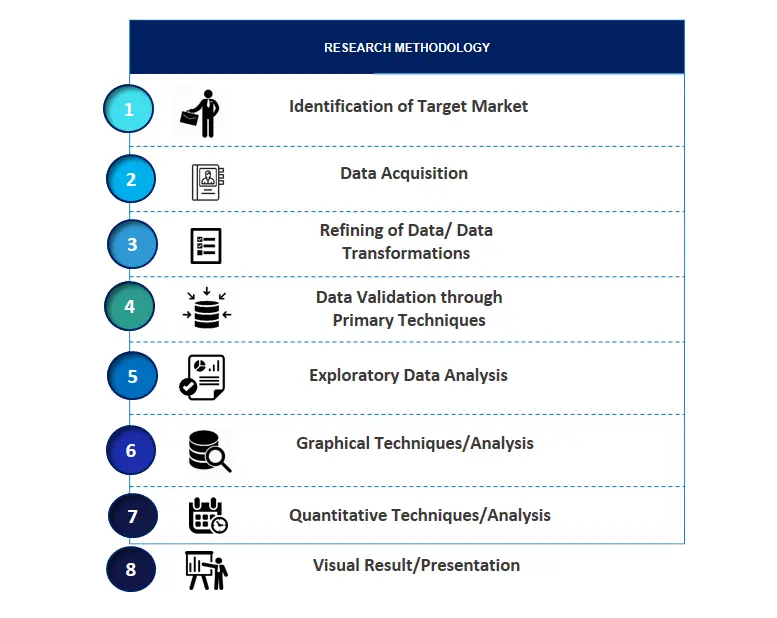
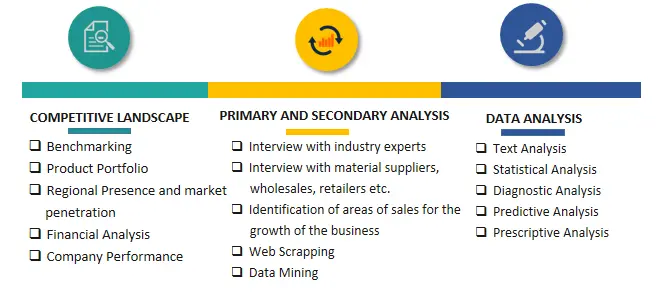
2. Research Methodology
2.1. Research data source
2.1.1. Secondary Data
2.1.2. Primary Data
2.1.3. SPER’s internal database
2.1.4. Premium insight from KOL’s
2.2. Market size estimation
2.2.1. Top-down and Bottom-up approach
2.3. Data triangulation
3. Executive Summary
4. Market Dynamics
4.1. Driver, Restraint, Opportunity and Challenges analysis
4.1.1. Drivers
4.1.2. Restraints
4.1.3. Opportunities
4.1.4. Challenges
5. Market variable and outlook
5.1. SWOT Analysis
5.1.1. Strengths
5.1.2. Weaknesses
5.1.3. Opportunities
5.1.4. Threats
5.2. PESTEL Analysis
5.2.1. Political Landscape
5.2.2. Economic Landscape
5.2.3. Social Landscape
5.2.4. Technological Landscape
5.2.5. Environmental Landscape
5.2.6. Legal Landscape
5.3. PORTER’s Five Forces
5.3.1. Bargaining power of suppliers
5.3.2. Bargaining power of buyers
5.3.3. Threat of Substitute
5.3.4. Threat of new entrant
5.3.5. Competitive rivalry
5.4. Heat Map Analysis
6. Competitive Landscape
6.1. Global Nonpackaging Foam Market Manufacturing Base Distribution, Sales Area, Product Type
6.2. Mergers & Acquisitions, Partnerships, Product Launch, and Collaboration in Global Nonpackaging Foam Market
7. Global Nonpackaging Foam Market, By Product Type (USD Million) 2021-2034
7.1. Flexible foam
7.2. Rigid foam
8. Global Nonpackaging Foam Market, By Material (USD Million) 2021-2034
8.1. Polyurethane (PU)
8.2. Polystyrene (PS)
8.3. Polyethylene (PE)
8.4. Polypropylene (PP)
8.5. Rubber foam
8.6. Others
9. Global Nonpackaging Foam Market, By End Use (USD Million) 2021-2034
9.1. Construction
9.2. Automotive
9.3. Furniture & bedding
9.4. Electronics
9.5. Healthcare
9.6. Others
10. Global Nonpackaging Foam Market, By Region, (USD Million) 2021-2034
10.1. Asia-Pacific
10.1.1. Australia
10.1.2. China
10.1.3. India
10.1.4. Japan
10.1.5. South Korea
10.1.6. Rest of Asia-Pacific
10.2. Europe
10.2.1. France
10.2.2. Germany
10.2.3. Italy
10.2.4. Spain
10.2.5. United Kingdom
10.2.6. Rest of Europe
10.3. Middle East and Africa
10.3.1. Kingdom of Saudi Arabia
10.3.2. United Arab Emirates
10.3.3. Qatar
10.3.4. South Africa
10.3.5. Egypt
10.3.6. Morocco
10.3.7. Nigeria
10.3.8. Rest of Middle-East and Africa
10.4. North America
10.4.1. Canada
10.4.2. Mexico
10.4.3. United States
10.5. Latin America
10.5.1. Argentina
10.5.2. Brazil
10.5.3. Rest of Latin America
11. Company Profile
11.1. Armacell International
11.1.1. Company details
11.1.2. Financial outlook
11.1.3. Product summary
11.1.4. Recent developments
11.2. BASF
11.2.1. Company details
11.2.2. Financial outlook
11.2.3. Product summary
11.2.4. Recent developments
11.3. Covestro
11.3.1. Company details
11.3.2. Financial outlook
11.3.3. Product summary
11.3.4. Recent developments
11.4. Dow
11.4.1. Company details
11.4.2. Financial outlook
11.4.3. Product summary
11.4.4. Recent developments
11.5. FXI Holdings
11.5.1. Company details
11.5.2. Financial outlook
11.5.3. Product summary
11.5.4. Recent developments
11.6. Huntsman Corporation
11.6.1. Company details
11.6.2. Financial outlook
11.6.3. Product summary
11.6.4. Recent developments
11.7. INOAC Corporation
11.7.1. Company details
11.7.2. Financial outlook
11.7.3. Product summary
11.7.4. Recent developments
11.8. JSP Corporation
11.8.1. Company details
11.8.2. Financial outlook
11.8.3. Product summary
11.8.4. Recent developments
11.9. Recticel
11.9.1. Company details
11.9.2. Financial outlook
11.9.3. Product summary
11.9.4. Recent developments
11.10. Saint-Gobain
11.10.1. Company details
11.10.2. Financial outlook
11.10.3. Product summary
11.10.4. Recent developments
11.11. Others
12. Conclusion
13. List of Abbreviations
14. Reference Links